
Table of Contents
Introduction
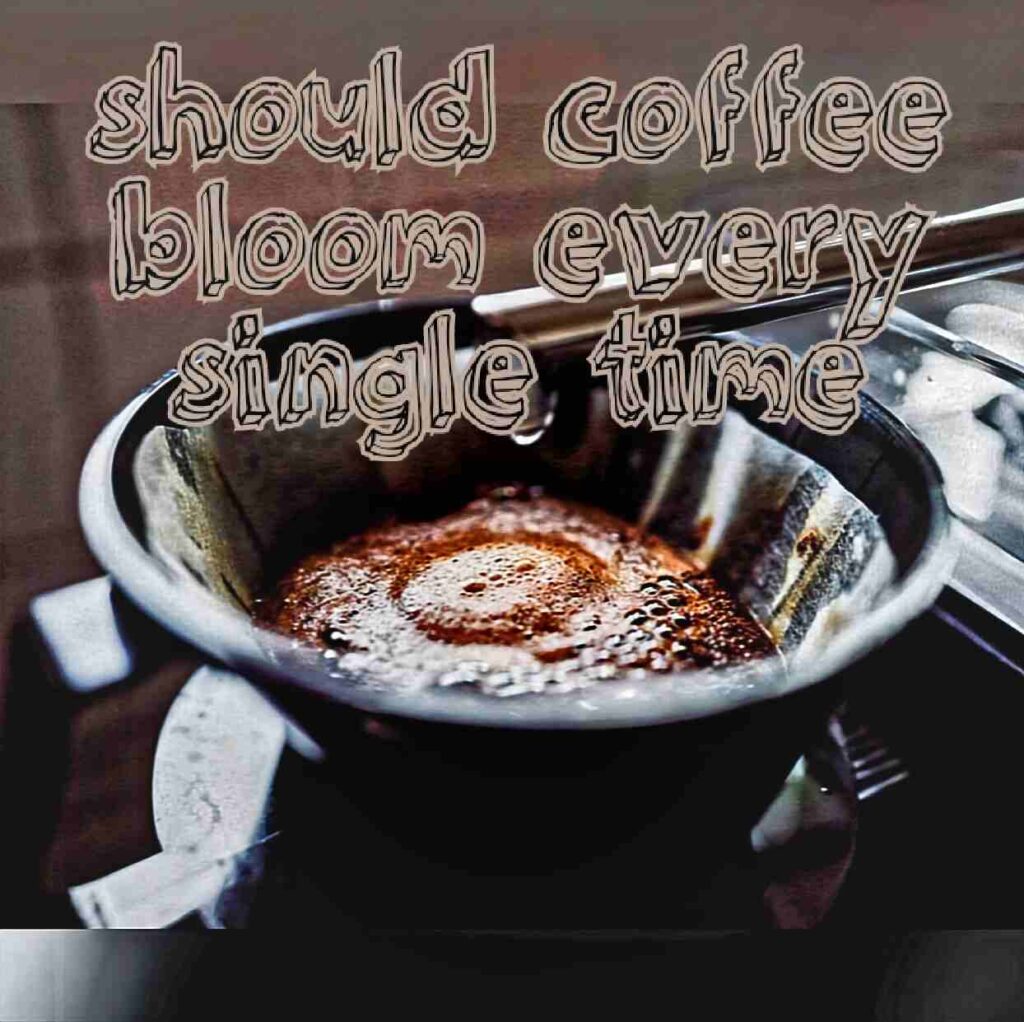
Puffing or rising with bubbles over the coffee surface while pouring hot water over it is called coffee bloom. It is a natural process of releasing gases from coffee at the time when hot water comes in contact and reacts with it. But why? Is it necessary? Should coffee bloom every single time while brewing?
These are the common questions that usually generate in people’s minds, especially at the time when they are going to make their first coffee. So, if you are curious about that query, then read the article completely to understand all necessary detail regarding it.
should coffee bloom every single time
Let’s start with a short, precise answer to our query, should coffee bloom every single time?
No, it is not necessary every single time.
As we know, blooming is a natural process of releasing gases but it depends on several factors, and for proper understanding of whether blooming is important or not, you must understand those factors. But before that, let’s go through the science behind it.
Science behind coffee bloom
Coffee beans naturally absorb carbon dioxide and retain it. This trapped gas will escape gradually in a few days or weeks after roasting but not all gas is released even if these coffee grounds are small sized, small, fine crushed particles that have a good surface area but still gas is trapped in it, which will only release accurately when you pour water over it.
When water reacts with coffee, it will wet the grounds and allow carbon dioxide to escape easily. So, when you are pouring water during brewing, you will see a bubble rise over coffee. This will indicate the gas releasing process.
Now, after understanding the actual science behind coffee bloom. Let’s move towards another important query, Is bloom really necessary for good coffee?
Is bloom necessary for good coffee
After understanding the basic science, it is clear that bloom is a sign of gases releasing which means proper reaction of water with coffee. Hence, it is also a sign of proper coffee extraction. When coffee reacts with water, it just only releases carbon dioxide. It also shows the maximum extraction of coffee compounds and saturation in water that will directly impact the overall coffee taste and profile.
Hence, you conclude that blooming can contribute to overall coffee extraction and taste profile.
Factors that affect coffee bloom
Now, in order to understand our query, should coffee bloom every single time? Let’s explore the factors that impact coffee bloom.
Coffee beans freshness
The first factor of coffee bloom is coffee bean freshness. As we discussed above, that trapped gas inside the beans has escaped timely. Hence, old coffee beans have less gas as compared to fresh coffee beans. So, you will find out a coffee bloom bitterly by using fresh coffee beans instead of old coffee beans.
But remember, less or invisible coffee bloom does not mean your coffee is stale. There are some other factors too, which are mentioned below.
Roast level
Should coffee bloom every single time, the answer is no because of another factor and that is roast level. Roast level changes the physical structure and characteristics of coffee. Dark roast means heating coffee for a prolonged time, which creates a huge amount of CO₂ gas that is released while reacting with water and you will get massive coffee bloom. Medium roasts have a moderate amount of trapped CO₂ gas and light roasts have less CO₂ because of less heating exposure. Hence, you will get less coffee bloom as compared to dark roasts.
Grind size
Should coffee bloom every single time, the answer is depending on another factor and that is the grind size of coffee you are going to use. Usually, there are three types of coffee size. Coarse, medium and fine. Coarse grind sizes have less surface area and fine grind sizes have maximum surface area. As we know, the science behind the coffee bloom is to react coffee with water. Maximum surface area means maximum amount and maximum chances of water to react with coffee.
Hence, you will get maximum coffee bloom if you are using fine coffee. Moderate bloom if using medium grind size coffee and a generally slightly low or weak coffee bloom if using coarse or whole coffee.
Water temperature
The temperature of water also influences the coffee bloom process. Ideally, hot water is suitable for brewing because it allows maximum extraction of coffee compounds but not just that. How water also allows trapped gases to be released more quickly. The temperature of hot water can wet and break the coffee particle more accurately as compared to mild or cold water. Hence, the more quickly and accurately the reaction of water over the coffee particle, the more perfectly the coffee gas is released. Hence, the maximum coffee bloom appears.
Coffee water ratio
Should coffee bloom every single time, the coffee water ratio is also an important factor that influences the answer. For perfect coffee bloom, it is necessary to select the perfect coffee water ratio and for that, the water amount should be twice the amount of coffee. For perfect bloom during brewing, first you have to select that ideal ratio. Once you get maximum bloom and the coffee bed is properly saturated, add the further required amount of water in it for making coffee.
Brewing method
The brewing method is the last and most important factor that you must have to know about. Should coffee bloom every single time, the answer is depending on how you brew it. Let’s take an example of some common brewing methods in the table below for better understanding.
| Brewing method | Should bloom or not |
| Pour over | Generally, YES |
| Chemex | Generally, YES |
| French press | Optional |
| Aeropress | Optional |
| Drip coffee maker | Usually, NO |
| Moka pot | Generally, NO |
| Cold brew | Generally, NO |